The Complete Beginner's Guide To Private Label Skin Care
Private label for skin care can be incredibly confusing if you’re completely new to the industry.
You’ve probably heard the term, but aren’t quite sure what it means, if it’s the right fit for your brand, or how it compares to other manufacturing options.
If you’re feeling confused, Innacos is here to help!
Our in-depth guide below breaks down everything a beginner could possibly need to know about private label skin care.
We discuss the exact definition, debunk the three biggest myths, and we discuss the pros and cons of all the potential alternatives so you can make the best decision for your brand.
What Is Private Label?
If you’re thinking about how you’re going to formulate your products, you don’t need to learn advanced formulating chemistry or figure out how to set up a production line from scratch.
What matters most for brand owners is understanding the trade-offs between different formulating methods.
If you’ve done any basic research into launching a beauty brand, you’ve probably come across the term ‘private label’ again and again.
It’s one of the most common manufacturing options for new founders.
Private labeling (also known as white labeling) involves adding your brand’s own customized branding to a lab’s preformulated product.
Bulk is similar: it involves purchasing large quantities of preformulated product in large unbranded drums. You can then choose to fill and package it at home in your own studio, with a third party, or use the formula for professional treatments at spas or clinics.
The biggest upside of private label/bulk is the speed and cost. Because the formulas are made in advance, there’s no additional lengthy and cost-intensive R&D phase involved.
However, the downside is that all the formulas are standardized. There’s no room for customization outside of basic changes to the scent or color.
Plus, you won’t own the IP rights to the formula, which means you’re locked in with that particular lab if you want to keep making the same product.
At Innacos, we’re experts at formulating clean, cruelty-free, and sustainable private label skin care. Explore our range of over 60 preformulated products and order samples directly from our website here.
How Common is Private Label for the Beauty Industry?
Private label is extremely common for new and growing brands. Even some premium brands will use private label for non-hero product lines.
According to Grand View Research, the global private label cosmetics market was estimated at $10.64 billion in 2024 and is projected to reach $14.39 billion by 2030 - a CAGR of 5.2%.
The skincare segment led the private label beauty market in 2024 with a revenue share of 41.7%.
In the US, WWD reports that approximately 10% of all health and beauty sales in the US are from private or store label brands.
It’s especially common for influencer brands. For example, as explained in Glossy, Kylie Jenner’s original lip kits were originally private labeled through Seed Beauty’s contract factory (Spatz Laboratories).
Consumer perception is also shifting (at least when it comes to own-brand beauty).
Cosmetics Business reports on the 2025 survey by NielsenIQ showing 75% of consumers think own-brand products (which are private labeled) are good value, and 72% view them as strong alternatives to big brand names.
Myths About Private Label
Myth 1: Private Label Skincare Is Scammy
Some people confuse private labeling with a low-effort dropshipping strategy, where sellers don’t even know what’s in the skin care products.
Private label, when done the right way, gives you access to well-formulated, professionally tested products at a much lower cost.
It only feels scammy when:
The skincare uses bad ingredients and is formulated poorly
The marketing and sales process is lazy or misleading
The products are overpriced with no real differentiation strategy.
Myth 2: Only Cheap Or Low Quality Brands Use Private Label
You don’t need 100% unique formulas across your product line to succeed - even for premium brands.
Plenty of masstige and premium brands use private labeling to manufacture some of their secondary ranges (like basic cleansers or hand creams) - while investing in custom formulation for their ‘hero’ products.
The key is being selective. You need to find high quality manufacturers with impressive formulas, and a clear marketing strategy that positions your brand well in the market.
Private labeling can sometimes work across your entire product line, but only if you understand how your brand stands out in the market.
As our founder, Megan Cox, told Beauty Independent, the decision to private label comes down to where exactly you’re innovating:
1) Ingredients or processes
2) Formulation
3) Market segmentation
Market segmentation doesn’t require formulation innovation - just innovation in how or to whom your formulas are marketed. In this case, private label can work very well.
Taking Fenty as an example, Megan explains, ”Some of its formulations are innovative, but the true innovation is in the shade range and flawlessly delivered to an underserved market segment. She [Rihanna] nailed the market segment. Half of her products could be private labeled, and no one would bat an eye.”
Private label isn’t dead. What’s dead is launching stock formulas with zero thought put into branding or positioning.
Myth 3: Everyone Can Copy Your Product
Although the formulas aren’t exclusive, that doesn’t mean your brand will look just like everyone else’s.
Customers rarely connect with skin care formulas alone. They connect with:
Branding
Packaging
Story and identity
Marketing messaging
Shopping experience
If you choose the private label route, you must differentiate through your branding and marketing.
Consider your brand positioning, brand story, visual identity, the relationship you build with your customers, and how your brand shows up across platforms.
When Private Label Makes Sense
Private label is the best strategy for first time founders working on a low budget who need to test demand before investing heavily in manufacturing.
Using less expensive, preformulated formulas is a great method to validate the market for your brand.
Naturally, this works best (even from the beginning) for marketing-focused businesses compared to formulation-led brands.
When You Should NOT Use Private Label
If you:
Want a truly unique formula
Are building a science-led, specific ingredient-focused hero brand
Want IP ownership
Want long-term control over formulation
Private label will not work for your business, especially in the longer term.
Alternatives To Private Labeling
Although private label is a popular method of manufacturing for new beauty brands, it is just one option of many.
Formulating At Home
Formulating from home can work in the beginning stages for those who want to learn the basics of formulating, but only if the product range is very simple and water-free. Think body butters, soaps, simple balms, or oils.
However, there are serious downsides.
The recent passing of MoCRA means it’s no longer feasible for any brands earning over 1 million in revenue to formulate from home. It’s completely untenable at scale. Learn more about the consequences of MoCRA in our full post here.
Plus, it’s a much riskier strategy.
The risk of contamination is much higher compared to working with chemists in a professional lab. If people are hurt due to your poorly formulated products, you are liable as a consequence.
If your heart is set on formulating from home, you must learn how to formulate correctly and test for product safety before you sell any products to the public. Learn more about the dangers of formulating from home here.
Custom Product Creation
If you don’t have the budget for full custom formulating, but you want your formula to stand out from the rest on the market, the best strategy for you is custom product creation.
This process involves adding a limited number of ingredients on top of a lab’s base formula.
It works well when you have key ‘hero’ ingredients in mind, and you can’t find a private label formula on the market that comes close to your vision.
Although it’s not as inexpensive or quick as private label, it’s not nearly as expensive or lengthy as full custom formulating.
It’s the perfect middle ground and works well for new brands on a budget who really want custom skin care from the beginning.
At Innacos, our nominal CPC fee is just $2,500 per product and we offer up to 150% of that back in the form of manufacturing credits against your first 2 runs. Learn more about custom product creation at Innacos on our website here.
Custom Formulating
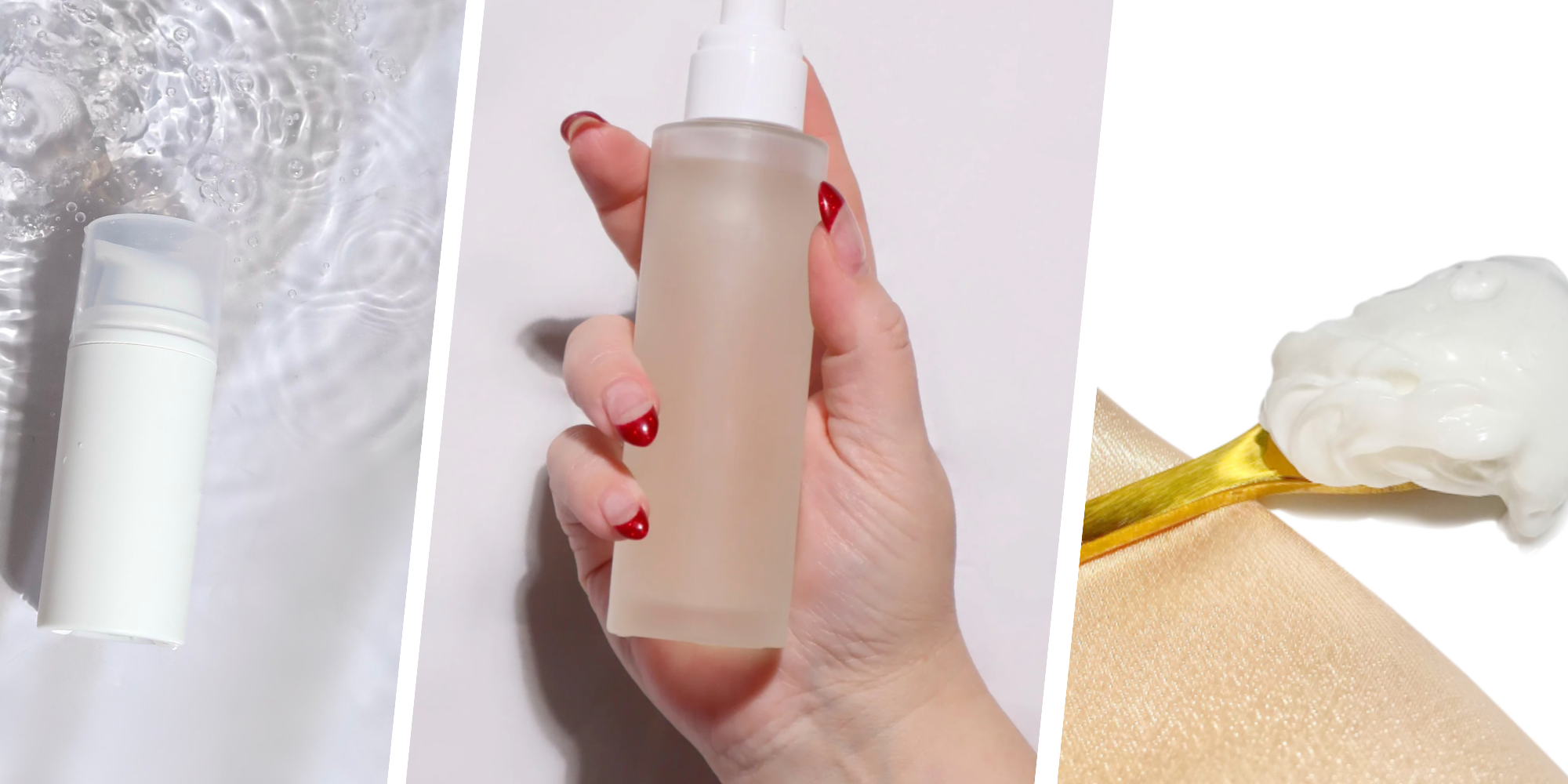
If you have an idea for a truly one-of-a-kind formula or product concept that your target market won’t find anywhere else, custom formulating is the method for you.
This process involves working with a team of professional chemists to create brand new custom skin care from scratch.
It is a lengthy and expensive process, but if you’re building a brand around unique product innovation, it can be well worth the investment.
At Innacos, we’re experts at formulating novel chemical research, new format products and concepts, hybrid products, and turning skin care products clean.
We offer up to 200% of your fees back in the form of manufacturing credits, and our MOQs start at just 2k pcs per product on your first order. Learn more about custom formulating at Innacos on our website here.
How To Choose The Right Path
When you’re new to the industry, it can be tough to decide on the best manufacturing strategy for your business. Consider the following questions:
What is your budget right now?
What’s your timeline plan?
Are you more concerned with speed or ownership of your formula right now?
Is your brand story product-led or focused more on unique branding?
Still torn? At Innacos, we offer ALL of the manufacturing methods listed above: private label/bulk, custom product creation, custom formulating, and we also provide contract manufacturing services if you already own a formula. Find the right path for your brand by taking our quiz here.
In sum, new skin care brand owners need to understand the following key points about private label:
Private label involves adding your own customized branding to a lab’s preformulated products
It’s one of the most popular formulating methods because it saves so much time and money
Many brands start off using private label and transition to custom formulating for its key hero products (often retaining private label as a strategy for secondary product lines)
The biggest downsides are the lack of customization options and the lack of IP rights
Alternatives include formulating at home, custom product creation, or full custom formulating
Looking for a skin care lab that offers over 60+ private label skin care products (along with bulk and full custom product creation/custom formulating options)?
Innacos would love to work with your brand! Get in touch to learn more via email: customerservice@innacos.com or phone: (812) 329-1105.