3 Things Founders Should Know About Labs That Make Skin Care Products
Labs that make skin care products are speaking with more first-time founders than ever before.
The post-2020 DTC revolution has completely changed the industry. As online shopping skyrocketed and barriers to entry lowered, launching a beauty brand became more accessible than ever.
The data reflects the shift - according to reports cited in Vogue, over 25% of all new global brand launches are in the beauty and personal care industry.
The opportunity is high, but the process still isn’t always simple for first-time founders.
From handling the lab and product selection process, to marketing, financial planning, and sales, there’s a lot to manage from day one - and it can quickly become overwhelming.
Our guide below breaks down three of the most important concepts to understand before you start looking for labs. We cover the exact stage you should source your packaging, why lower cost doesn’t necessarily mean lower quality (but does mean less flexibility), and why formulating at home is rarely a smart move long-term.
1) The Price You Pay Depends Dramatically on The Manufacturing Method
If you’re researching the manufacturing process behind beauty for the first time, it may surprise you that prices don’t just depend on the quality of the ingredients and the complexity of the formula.
They depend heavily on the manufacturing method you choose.
Formulas don’t just work out of the box. There’s an extensive testing process, and formulas often require multiple rounds of adjustment - resulting in wasted time, ingredients, and starting again from scratch.
To keep beauty formulas accessible for newer and smaller founders who may not have the capital to invest in a custom development, many labs offer preformulated products. These are expertly developed in advance, allowing brands to skip much of the messy and expensive R&D testing process.
This is important because it means that, even with limited capital, you don’t need to compromise on quality - however, you may need to compromise on formula novelty.
There Are Three Key Manufacturing Methods
Private Label/Bulk
Private label involves adding your own customized branding to a lab’s preformulated product, while bulk describes purchasing large quantities of preformulated product in large unbranded drums.
Because these formulas are made and tested in advance, private label/bulk are the most affordable options and the quickest ways to get to market.
However, the downside is limited customization. No major changes can be made to the formula beyond small adjustments to the scent or color. In most cases, you also won’t own the IP to the formula, meaning you can’t take it to another manufacturer.
At Innacos, we offer over 60 clean, sustainable, and cruelty-free skin care products on a private label/bulk basis. Find out more in our private label catalog here.
Custom Product Creation
Even changing an ingredient or two can make a huge difference. Formulating is a chemical process, meaning every single ingredient must work in harmony with all the others. The smallest tweak can affect the stability, texture, pH, or preservative performance.
That’s why there’s a dedicated manufacturing method for lightly modifying a lab’s existing pre-formulated base - it’s called custom product creation. This can be an excellent option for new brands that are building around a specific, unique hero ingredient.
A well-strategized semi-custom formula can result in a skin care product that appears genuinely unique, while remaining more affordable compared to fully customized services.
At Innacos, our custom product creation service has a nominal fee of just $2500 to formulate, plus you’ll get up to 150% of that back in the form of manufacturing credits against your first 2 runs. Learn more about our CPC process on our website here.
Custom Formulating
If you have an idea for a truly novel formula that your customers won’t find anywhere else, custom formulating is the way to go.
This involves working with a team of professional chemists to create brand-new custom skin care from scratch.
It’s by far the best manufacturing method if uniqueness is the main priority. This can make marketing much easier and more compelling. Industry-disruptive products are a clear reason to choose your brand over the thousands of others on the market.
It’s a huge competitive advantage over brands using preformulated products, which need to work harder to convince their customers why they’re different.
However, this only works if there’s a real demand for your new idea, and it’s much more expensive and time-intensive compared to private label or custom product creation.
At Innacos, we’re experts at novel chemical research, new to market concepts and product formats, hybrid products, and turning skin care clean. Plus, you’ll get up to 200% of your formulating fees back in the form of manufacturing credits. Learn more about our custom formulating process on our website here.
2) Formulating Is A Delicate Science
The relatively new MoCRA law has introduced additional safety and manufacturing requirements, which make formulating from home more complicated. Learn more about MoCRA in our full blog post here.
If you’ve ever made a basic lip balm or body butter at home, cosmetic chemistry probably seems pretty straightforward. So why the crack down?
In reality, formulating retail-ready skin care is very complex.
From photosensitive actives, to water-based formulas, or working with delicate preservatives that keep the product safe - there are so many variables at play.
More important than efficacy, improperly formulated products can be dangerous. A contaminated formula isn’t just a risk to your business reputation - it also poses a genuine risk to human health.
Creating a formula that is effective, safe, and chemically stable requires professional skills, high-tech equipment, and a solid quality control system in place.
For example, at Innacos, our testing screens for Escherichia coli, Salmonella, Staphylococcus, and gram-negative bacteria with every single batch. Learn more about the dangers of formulating from home in our blog post here.
If you currently sell a winning homemade formula, consider contract manufacturing with a professional lab.
This addresses the safety risks, as true professionals have the experience required to safely and consistently scale up production from 10 units per week to hundreds. Learn more about contract manufacturing at Innacos here.
3) Packaging Must Be Compatible With The Formula
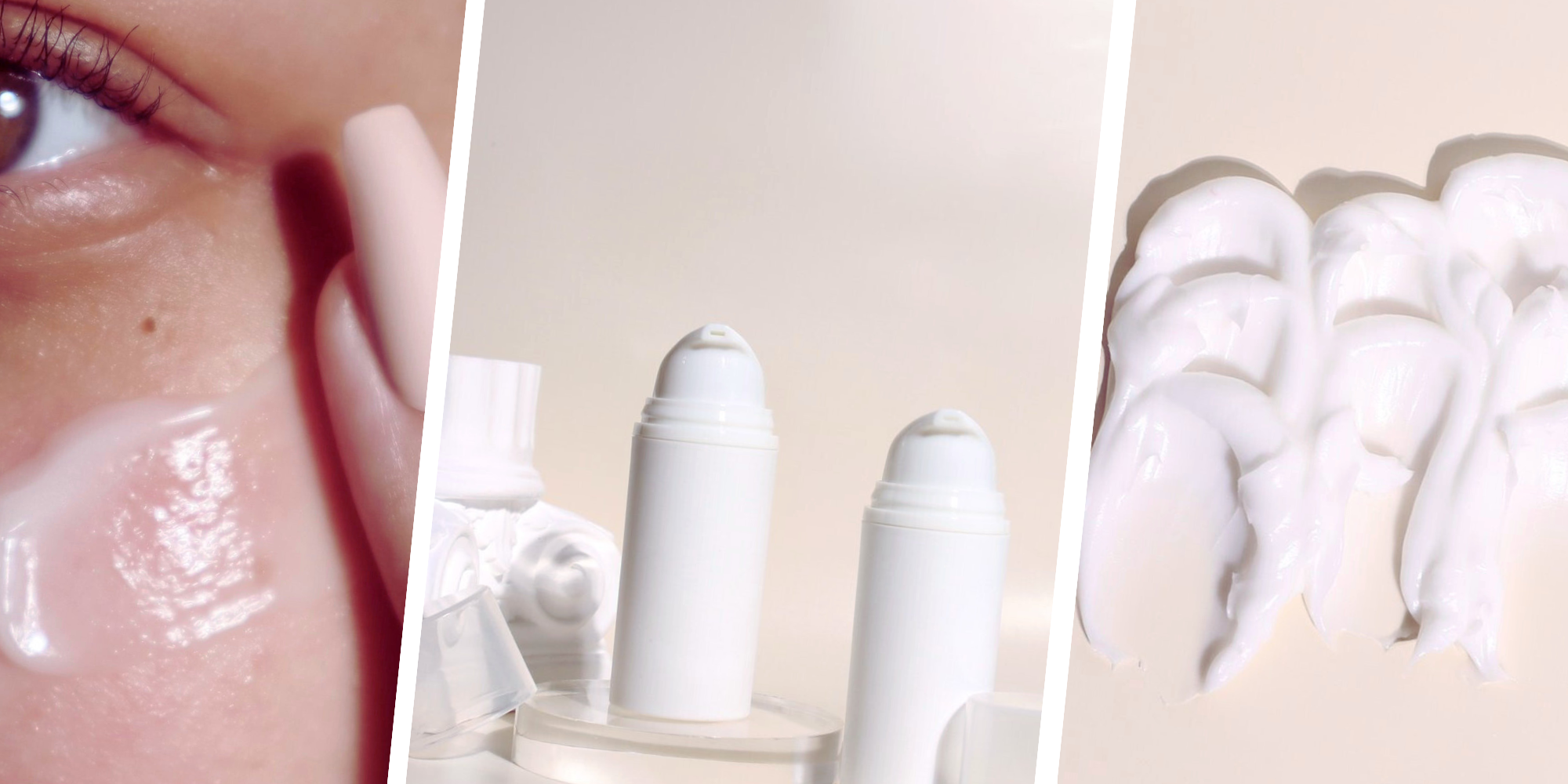
Have you ever noticed that a lot of your skin care products come in very similar bottles or tubes? That’s no coincidence. Skin care formulas are often delicate and can degrade easily, lose efficacy, or be prone to contamination risks when they’re stored in the wrong packaging.
There’s no one-size-fits-all. If you’re planning a highly intricate tube or bottle, do your research and ask your lab plenty of questions about the best packaging for your specific formulas.
For example, with thicker formulas, a pump bottle might be the wrong move as the product could get stuck in the mechanism.
On the other hand, thinner formulas that degrade easily when exposed to sunlight benefit from opaque containers to reduce light exposure and airless pumps to limit oxygen exposure.
That’s why you need to source packaging at the exact same time as your formula to ensure it’s compatible.
At the same time, there are some misconceptions about packaging and formula compatibility. For example, you may have heard that vitamin C serums require dark bottles to protect the formula from degradation from light exposure.
That can be the case - but not for all forms of vitamin C. Newer, more stable forms like tetrahexyldecyl ascorbate (used in our luxury vitamin C serum) are significantly less sensitive, meaning clear bottles are much less risky.
Packaging can influence the safety, shelf-life, and stability of your products - that’s why we recommend sourcing your packaging and your formula at the same exact time. This allows your lab to confirm compatibility early and helps avoid delays, reformulations, or performance issues later.
At Innacos, we can use our resources and network to connect you with the best packaging supplier, making sure that you find containers that are suitable for your chosen formula. Learn more about sourcing the best packaging for your needs on our website here.
In sum, before you book your first calls with potential labs, remember the following key points:
Price isn’t just about quality; it’s also about manufacturing methods. More customized = more expensive but easier to market. Standardized = much less expensive but lacks a unique offering without smart marketing.
Cosmetic formulating is extremely complex - small tweaks to the recipe can destabilize a formula. Most home formulators don’t have the cosmetic chemistry qualifications necessary to safely scale up production. Working with a professional lab is strongly recommended - especially post-MoCRA.
Your packaging and your formula must be compatible. That’s why it’s essential to source both at the same time and coordinate between manufacturers to make sure they’ll work together perfectly.
Ready to learn more about sourcing products for your beauty brand? Innacos would love to help! Get in touch via email: customerservice@innacos.com or call: (812) 329-1105 to learn more about our services that work best for your specific needs.